.png)
Arizona SR 77 - Oracle Highway: Town of Oro Valley
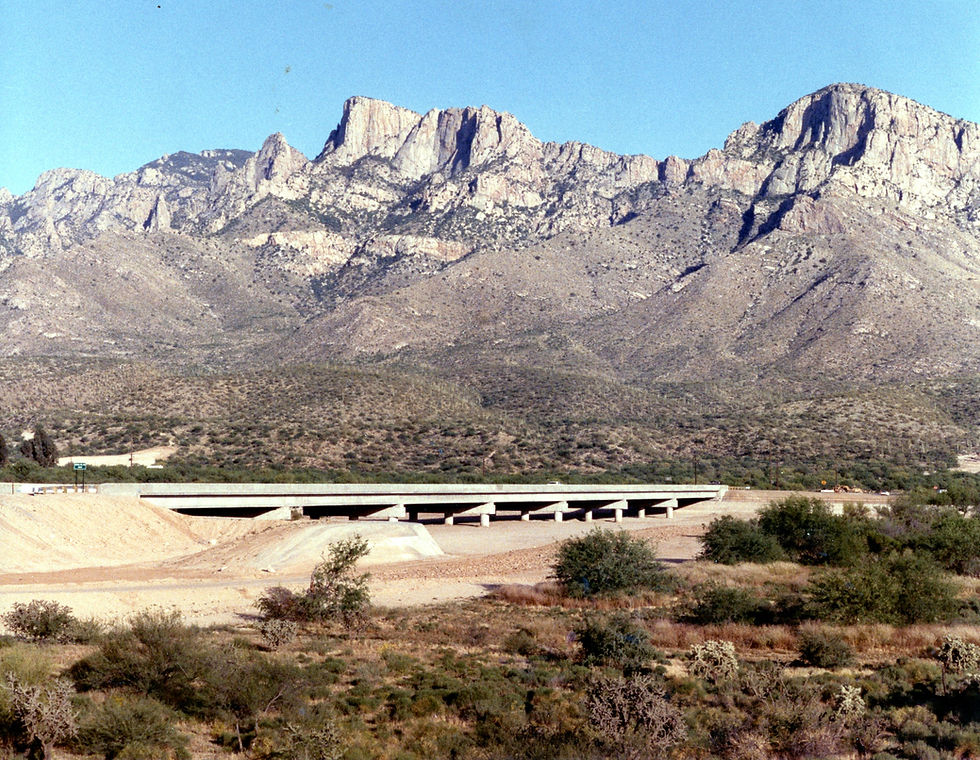
The beautiful expanse of desert just north of Tucson called Oro Valley joined the US in 1853 as part of the Gasden Purchase. Canada del Oro (Canyon of Gold) was the name given to the area by early prospectors due to a legendary lost spanish mine, however very little gold was ever found.
Homesteading started in the early 1900 and by the 1930's wealthy families started buying up the land to create massive winter estates and guest ranches. In the 1950's Louis Landon founded the Oro Valley Country Club and Oro Valley Estates. In the 1970's as Tucson looked at annexing the area, the community rallied together and incorporated in 1974 as the "Town of Oro Valley."
SR77, still called Oracle Road inside the town limits started as a stage coach route, and beyond the town, it is known as SR 77 Oracle Highway connecting Tucson with Catalina State Park, Florence, Superior, and Globe.
In 1984 Sundt was awarded the contract to widen Oracle Road through the heart of Oro Valley. M.M. Sundt was already performing a Pima County bank armoring project on the Canada Del Oro (CDO) Wash and a realignment of First avenue and Lambert Lane to include a new bridge over the CDO Wash. Awarded just months after the County Project, the ADOT project fit perfectly with our workforce and existing jobsite infrastructure.
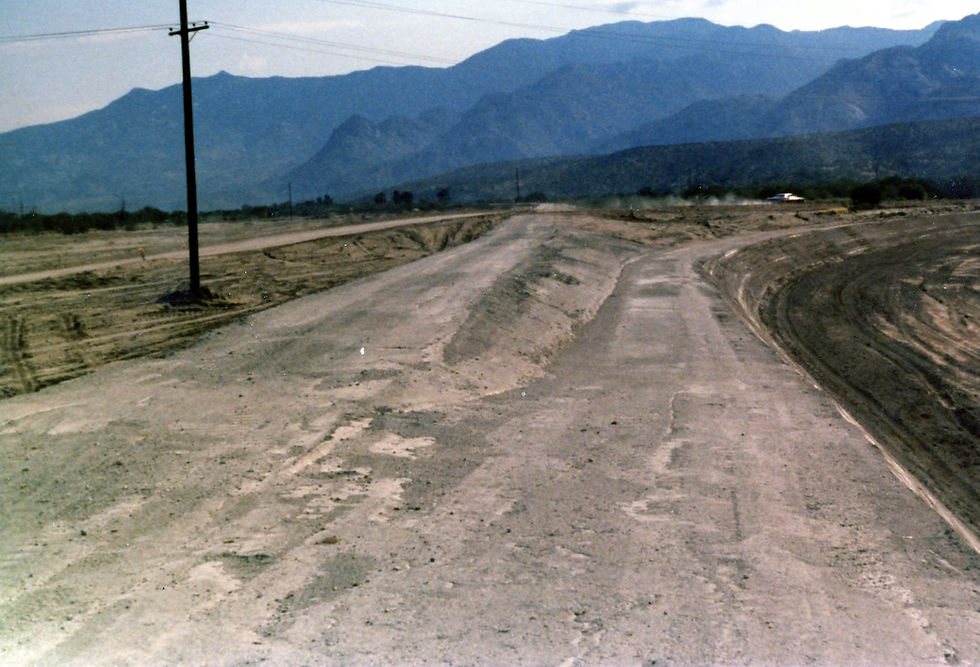
The County Project: Bank Armoring from near La Canada Blvd to Oracle Road was a large part of that project. The CDO Wash empties the Catalina Foothills, so frequent violent floods are not uncommon and our projects were not immune from setbacks.
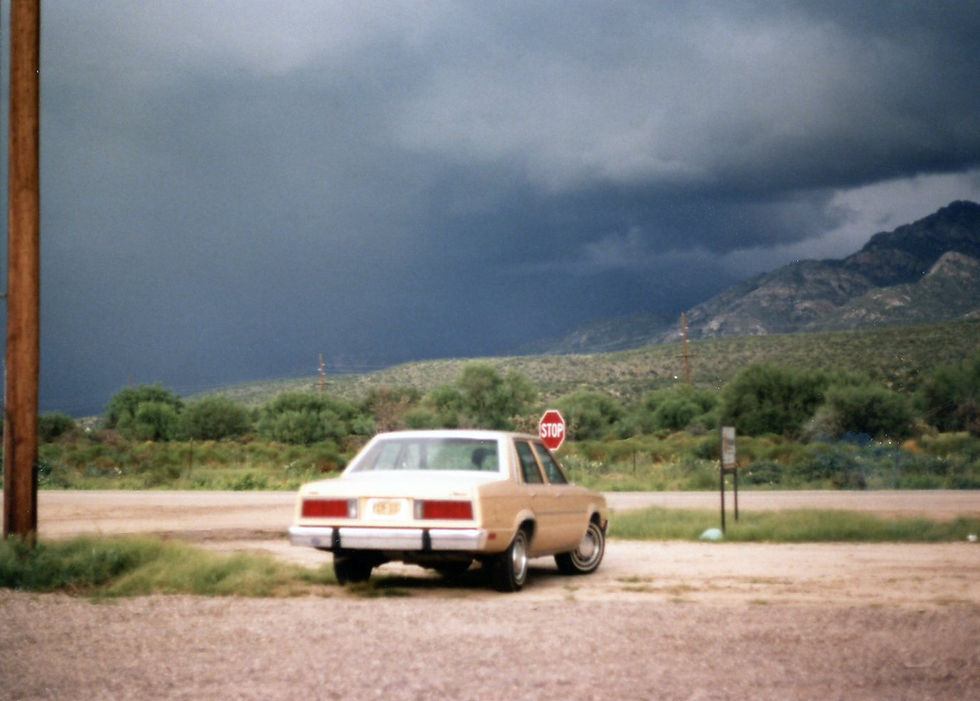
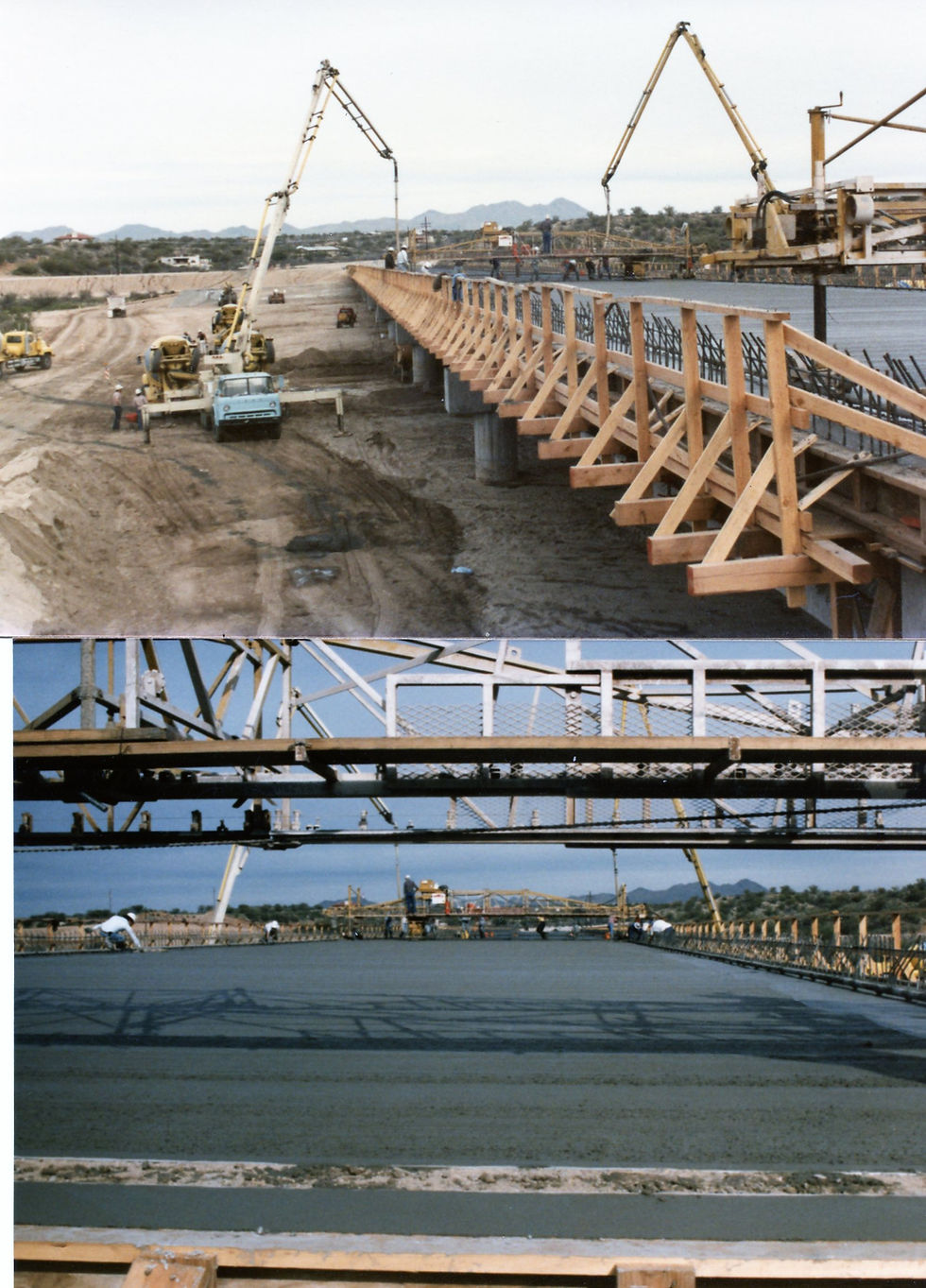
The project also included a new bridge on first avenue. This bridge was built on drilled shafts and prestressed bridge girders.
The deck on the 700 ft long bridge was done in one single pour utilizing multiple concrete pumps and a lot of gumption on the part of the finishers and laborers.
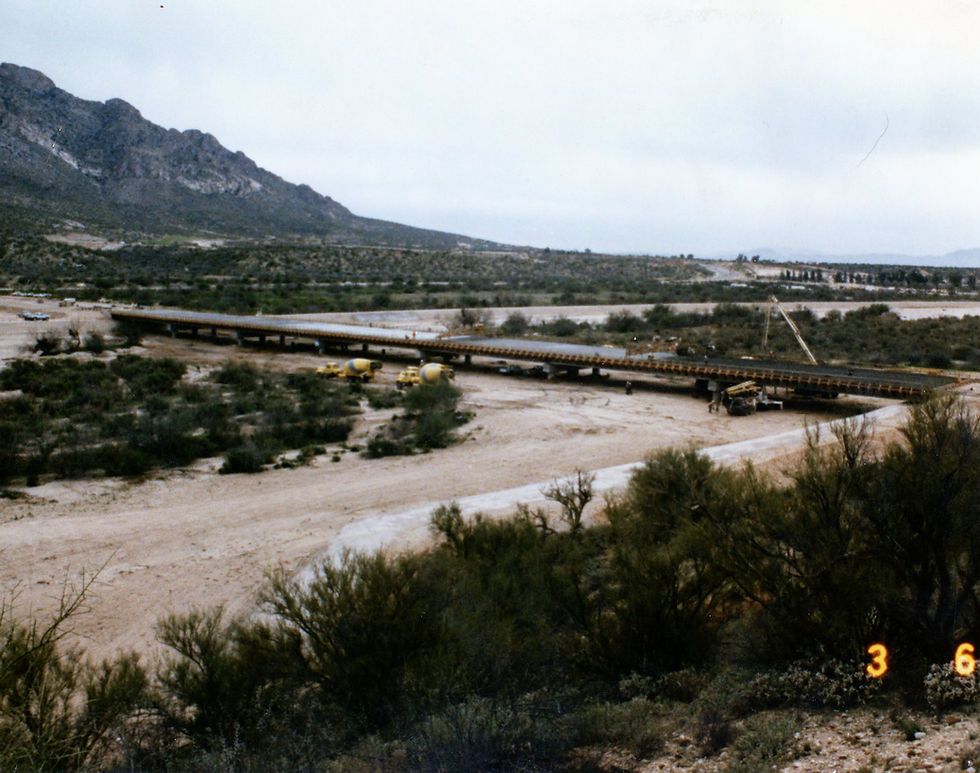
Mike Sick was the project manager for both projects I was the Senior Project Engineer and for a short stint, Will Garrison and I were once again teamed as Will was finishing his La Canada Bridge project downstream. I had the privilege of mentoring John Carlson, Jr. on the project when he was on break from school.
Judd Drilling did the drilled shafts on the project and the fine sand proved to be a huge obstacle for the drilling. Dave Judd was a professional and his experience taught me a lot about how to deal with drilled shafts in loose sandy soils.
That experience would lead me to collaborate with Dave again many years later as we tackled an emergency bridge replacement on US 95 near Yuma.
Bridge decks are usually placed with a bridge style finisher manufactured by Bidwell or other similar manufacturers. Because this pour was over 1,000 cubic yards and the county would not let us leave a cold joint, we had backups for everything including motors for the bidwell, concrete pumps, and a crane and concrete bucket just in case everything went to hell in a handbasket on that day.

The ADOT Project: This project included primarily widening the old two lane road to a four lane roadway. It included a new bridge over the CDO wash which was built on driven pipe piles that were embedded about 15 feet below the flowline of the wash. The excavation for those piles was a huge liability when factoring in the existing structure and the frequent flash floods for which CDO wash is famous. Once the substructure was complete, we hoped for a flash flood to help backfill the excavation, but no such flood came until we had backfilled the hole and started on the pier cap construction. Contractors luck I guess.

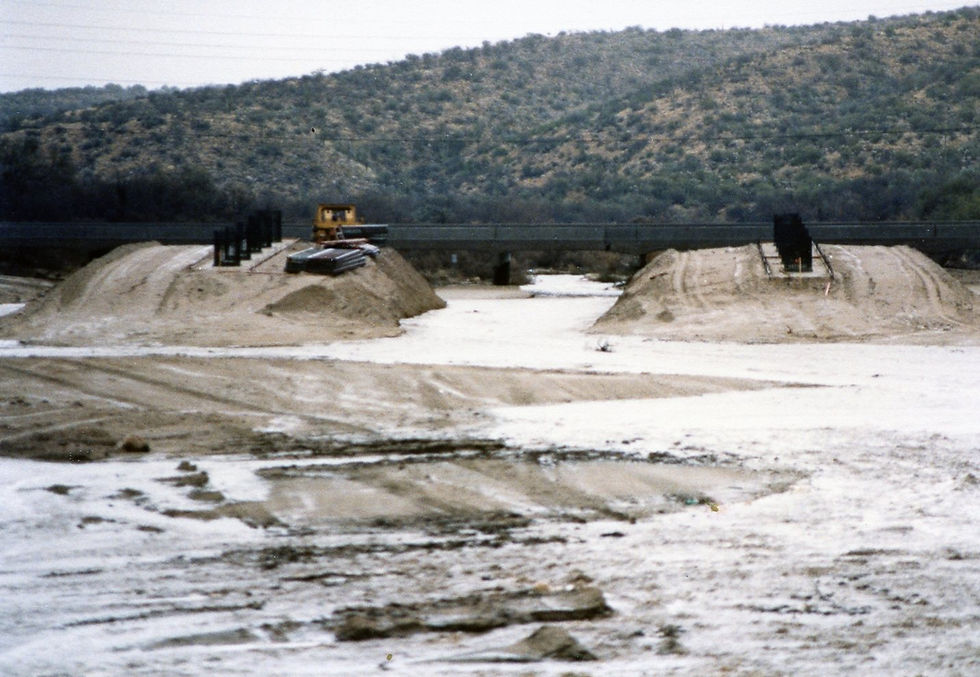
This project was one of the early projects where ADOT implemented Contractor Survey and Contractor Quality Control. Many issues we encountered in those early day led to changes in the standard specifications that we'll discuss in future posts.
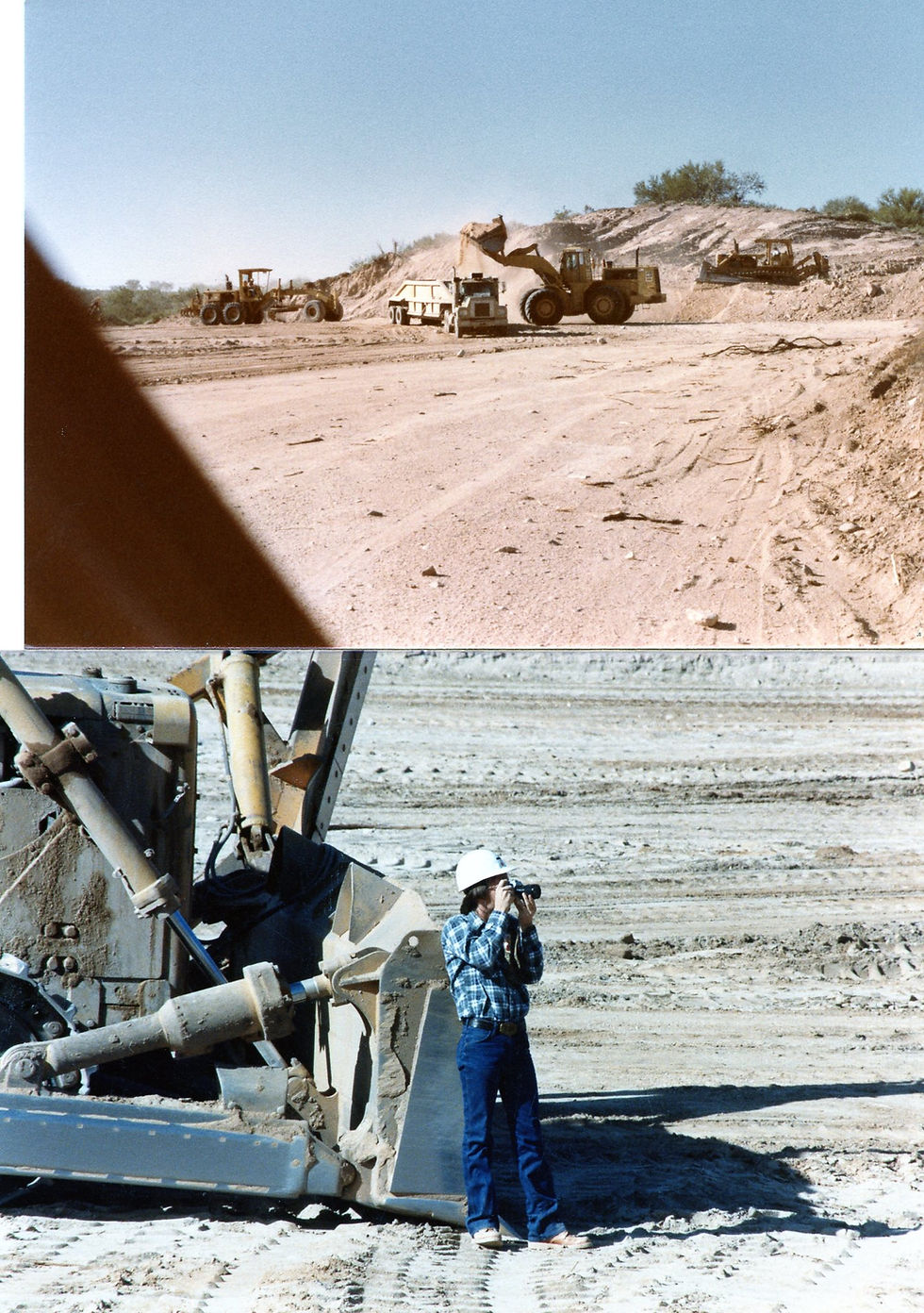
Anecdotally, when we started removing the old asphalt from Oracle Road, we often encountered unsuitable subgrade which the department blamed on our water trucks rather than an unforeseen existing condition. The ADOT specification associated with our work did not include a provision to test the subgrade, nor did it include a provision for ADOT to reimburse us for the extra work to correct the problem. So during the first half of the roadway reconstruction, we were forced to absorb the cost.
ADOT had another standard specification that allowed for contractor reimbursement of unsuitable existing subgrade. Unfortunately that specification was not in our contract.


While Mike Sick was on leave to attend to a family emergency, as acting Project Manager, I took it upon myself to write a letter to the Resident Engineer, asking for an official clarification of the uncontracted specification. His response was to visit me at the office and behind closed doors, ask me what my intentions were since the specification was not part of our contract. I simply replied "the specifications say that if we have questions about the specifications, the resident engineer will provide clarification." He nervously asked if this was some sort of set up and I told him I was simply curious, nothing more. We bantered a bit more about my motives and he finally offered to compensate us for corrections if necessary going into phase 2. That offer of course was in exchange for my not requiring him to respond formally to my letter as he didn't want to be on record defining a standard specification that somewhat conflicted with others in the book.
We really had no grounds for a claim, but a good bluff about an irrelevant specification ultimately saved us money on phase 2 of the widening. Plus it helped us to develop a great open relationship with that resident engineer. We were years ahead of ADOT with what would become Partnering. In fact, years later while defending against a lawsuit by a motorist, the Resident Engineer testified on our behalf, helping us to win the case and avoid a large settlement for something that was not our fault.


Comments